Not off
the rack.
The Complete Man was never only about the suit. It was about the man it was cut for. Eight stills on the craft of becoming him.
Raymond has been making cloth in India since its woollen mills opened at Thane in 1925. For more than three decades, one idea has carried the brand: The Complete Man. A man measured less by what he wears than by how he shows up.
In early 2026 the brand returned to that idea on film, with a man who leaves his work at the door before he steps inside his home. The thought is the right one. This concept asks what it looks like held still, one frame at a time, in the language of a tailor's shop.
Thane
Man
the set
held
Measured, marked in chalk, basted by hand, then worn until it becomes the person inside it. The Complete Man is made the same way, and never by himself.
So the campaign keeps two threads running at once: the making of the cloth, and the making of the man. The first is craft. The second is everyone he turns up for, a son, a father, a daughter, a morning that asks nothing grand of him.
Off the rack is a size. Made to measure is a life. Raymond has always sold the second one.
The suit was never the point. The man it asks you to become is.
Every image here is AI-generated. No real person was photographed, and no real Raymond product, store, or employee is shown. Each still began as a written character and a tailoring mood board, then was generated and art-directed to read as film.
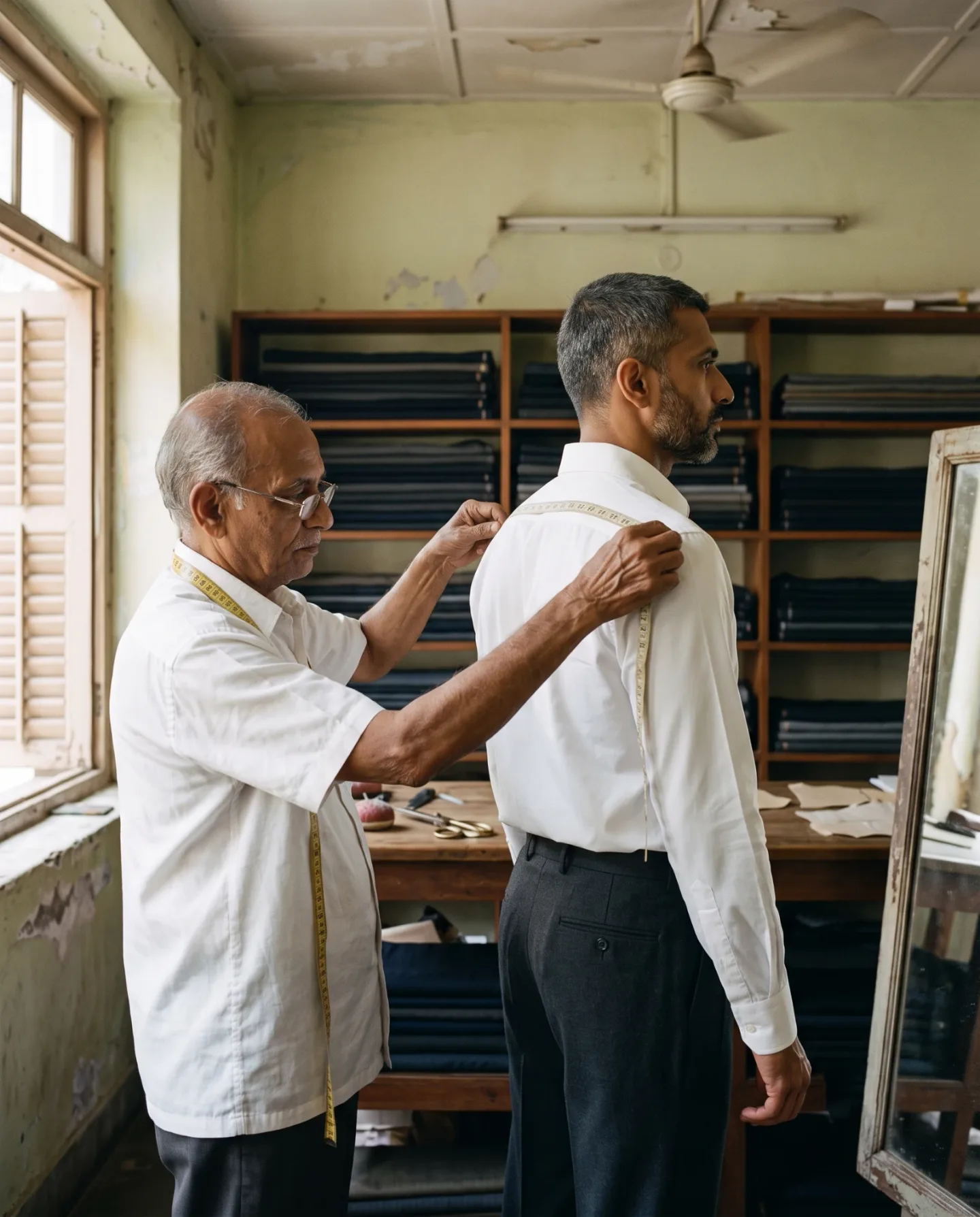
Before a single cut, the body is read. A tape across the shoulders, a number said aloud. Everything starts here.
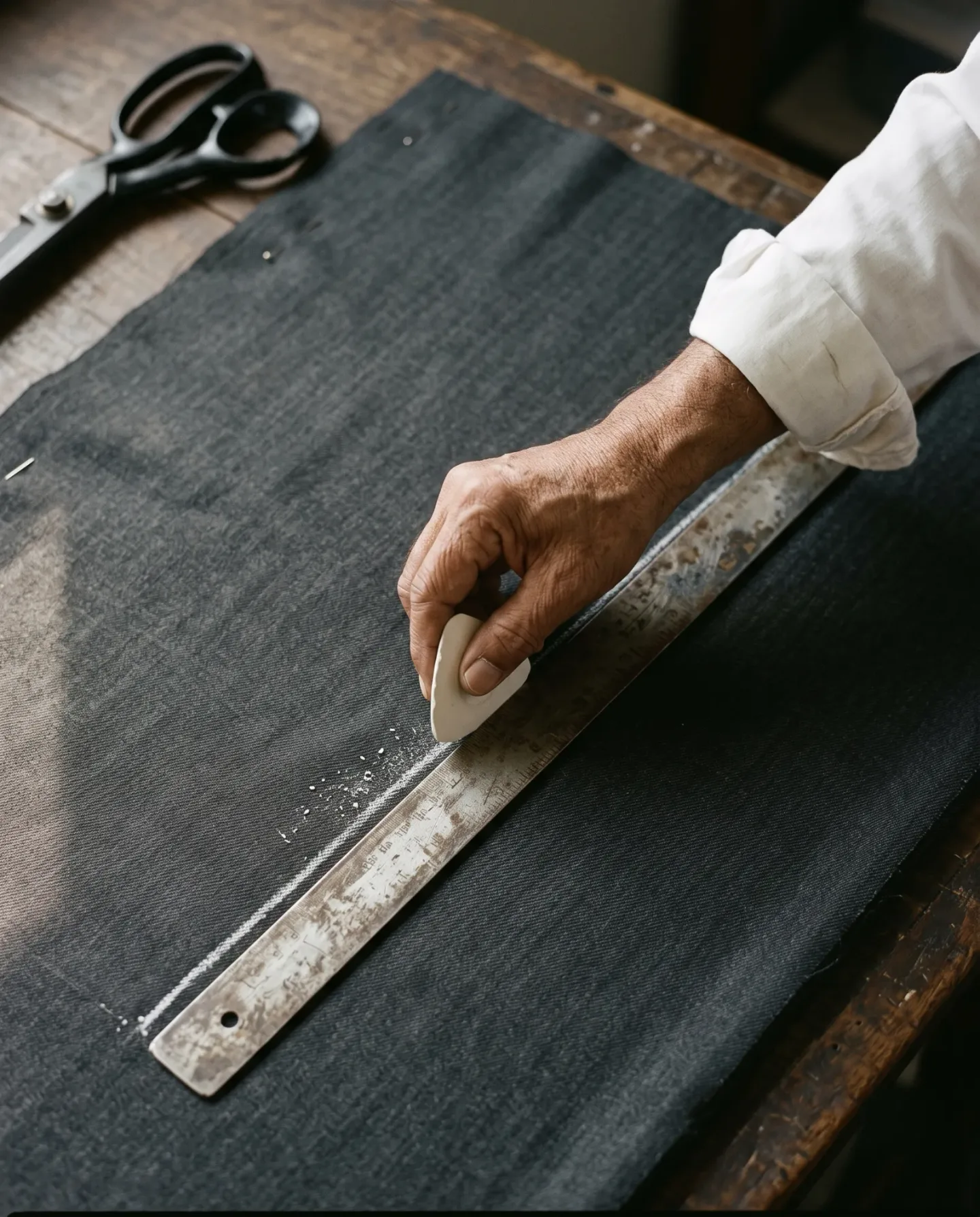
The pattern marked straight onto the cloth. One line, drawn once, with a steady hand. No undo.
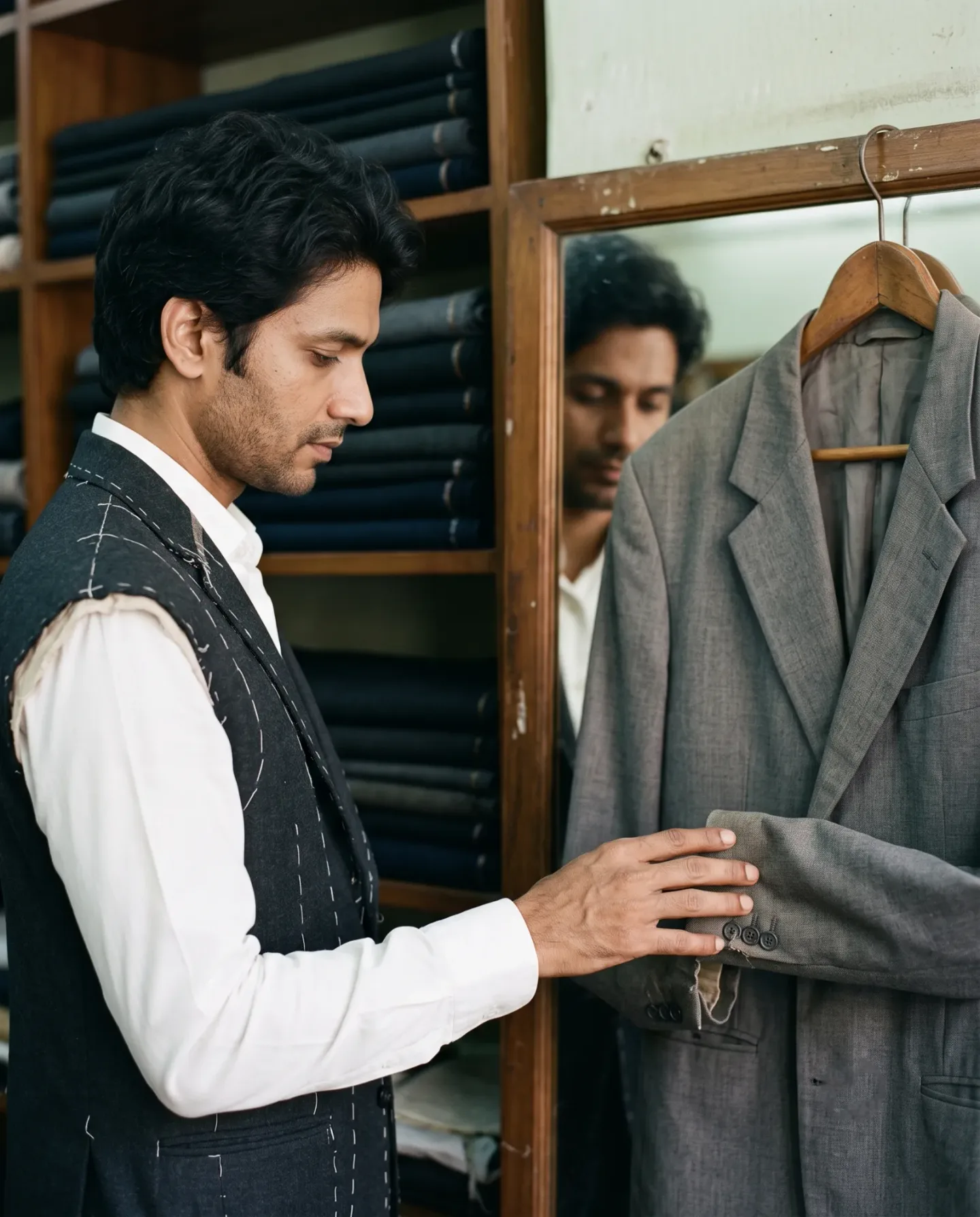
The jacket held together by hand before it is sewn for good. This is where the shape is decided, and where it can still change.
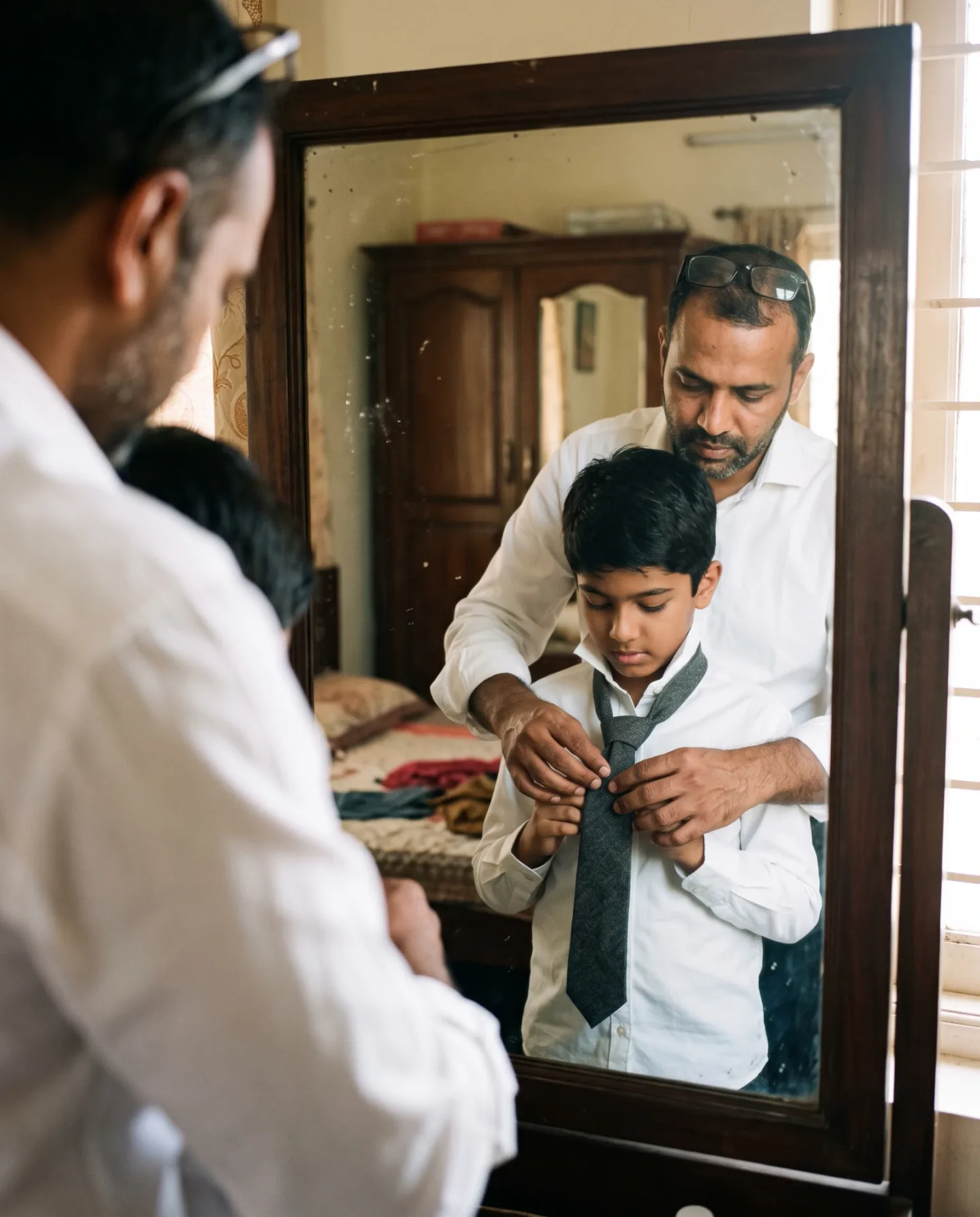
A father's hands over a son's, learning the knot for the first time. Some things are passed down, not taught.
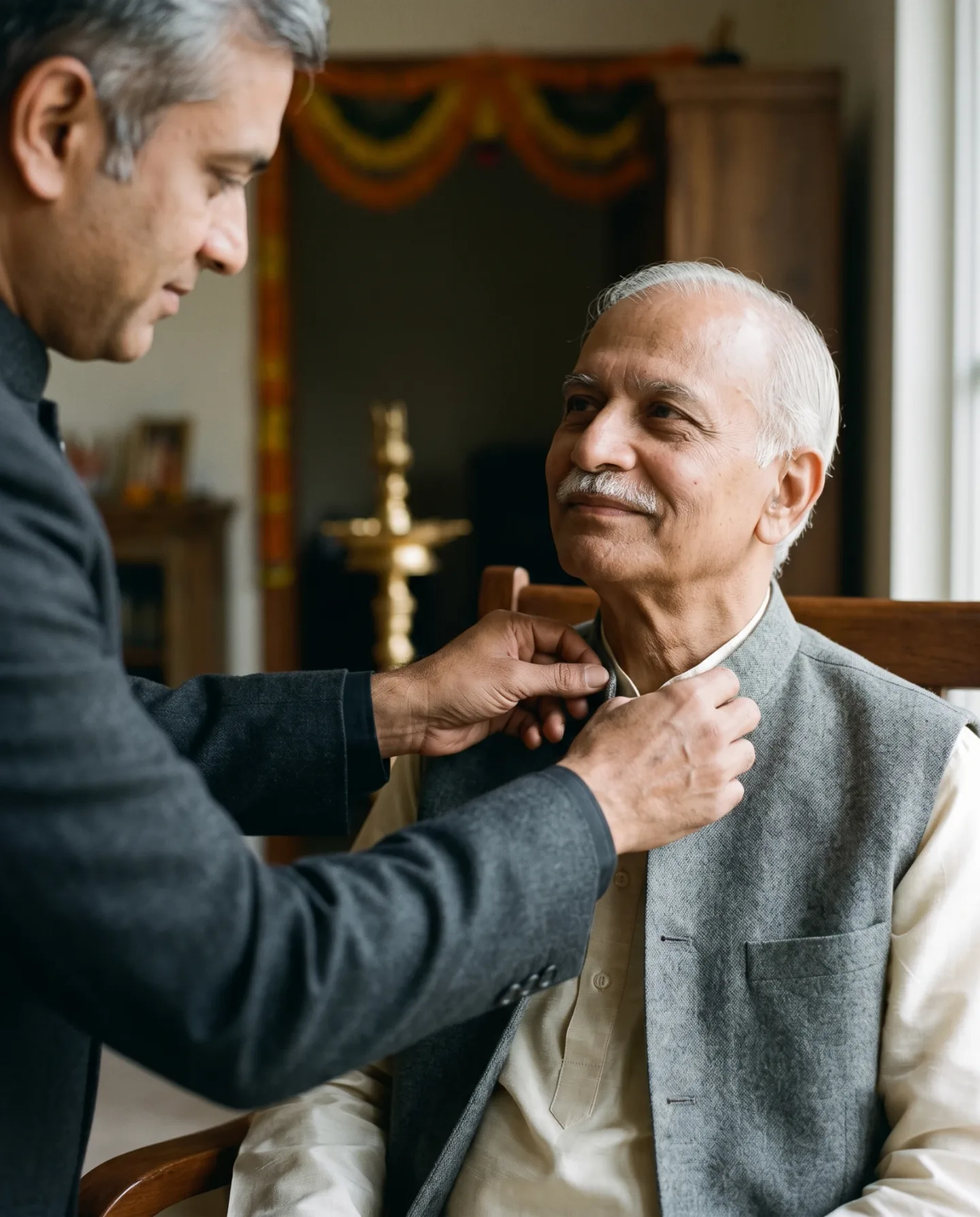
Straightening his father's collar before they leave. The man who was once dressed now does the dressing.

A work morning that makes room for one more thing. The jacket waits on the chair; breakfast does not.
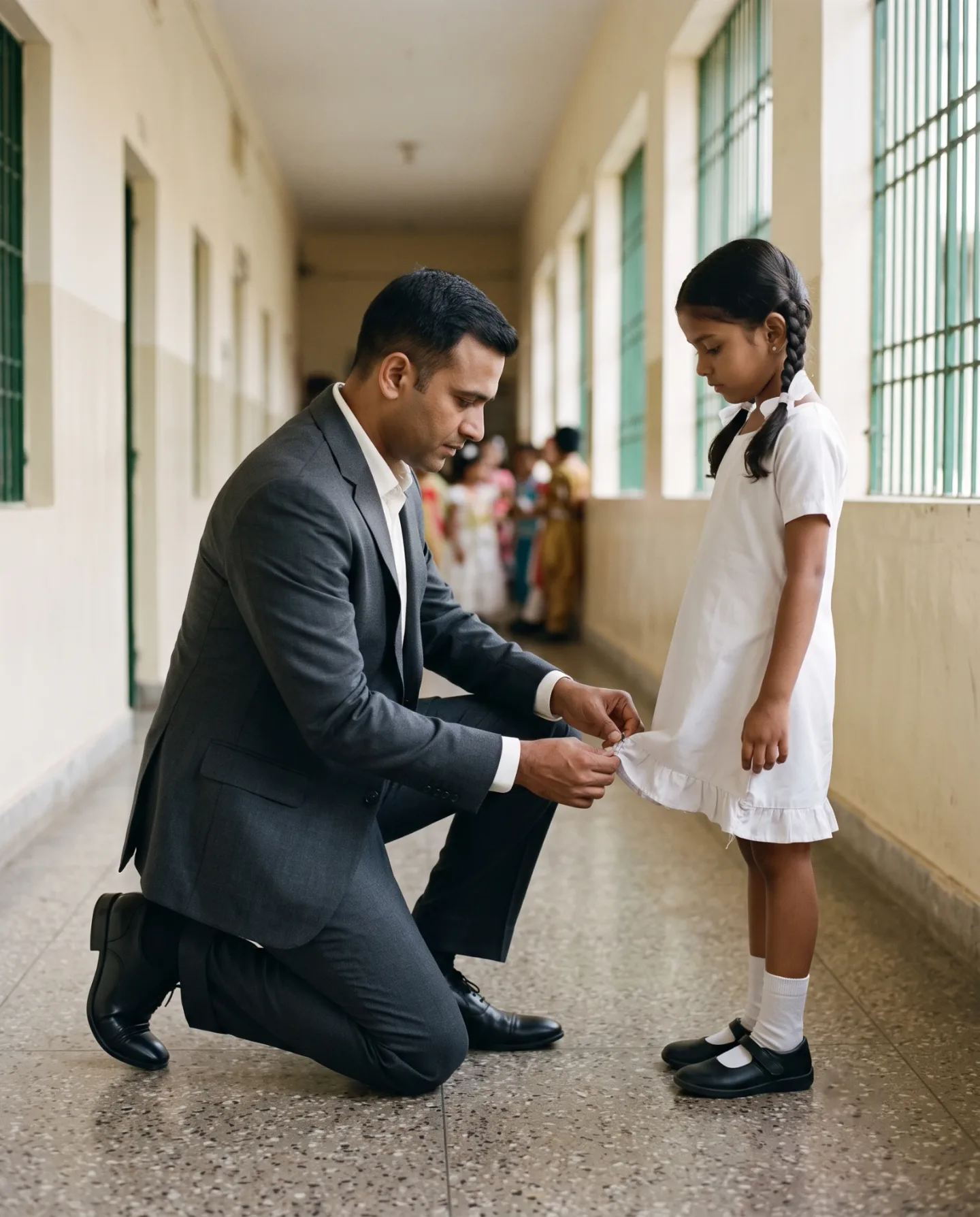
Kneeling in a school corridor to set a hem right. Complete is not a podium. It is showing up at knee height.
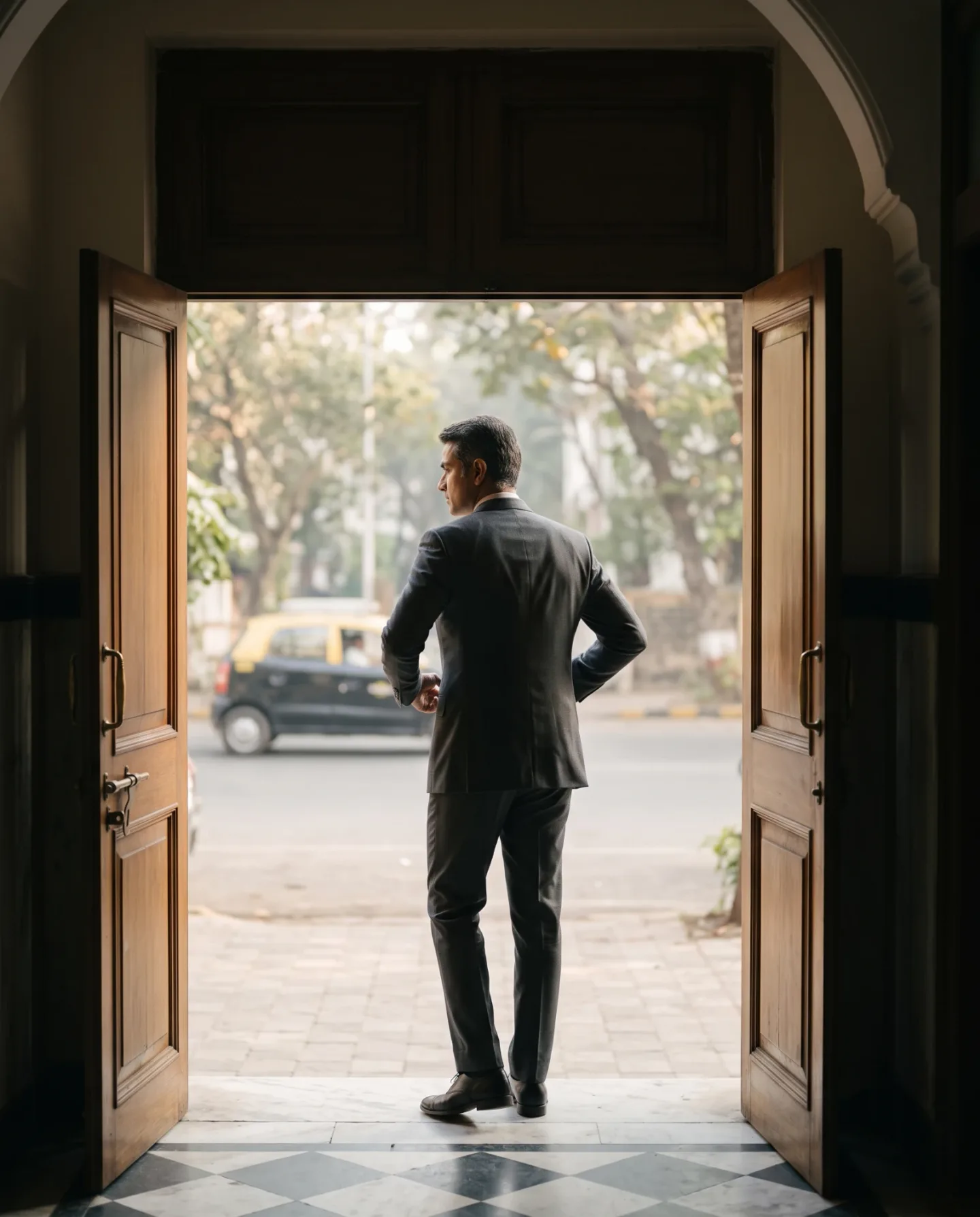
Dressed, and out the door into the city. The suit is finished. The man, every morning, a little more so.
Raymond's red appears once per frame at most, and never as a prop. A stitch, a mark, a full stop. The eye should have to find it.
The man is rarely front-on. Tailoring is seen from the side and from behind, the way a fitting is. The viewer stands where the tailor stands.
Peeling distemper, terrazzo floors, a clouded mirror. The settings are lived in, so the clothes read as worn, not styled.
Soft, directional window light that falls the way it falls on wool. No hard flash. The grade stays warm and even across all eight.
An inscriptional serif in the same chiselled tradition as Raymond's wordmark, so the line feels like the brand without borrowing its letters. Always set upright.
The typeface raymond.in sets its text in. Used here for everything that explains rather than announces.
The order-slip voice. Numbers, labels, and the honest small print.
Charcoal worsted, shirting ivory, and a single red. That red is #ED193A, taken straight from the Raymond logo and rationed the way a good tailor rations trim.
Open with The Finish as a single image the week the homecoming idea is in the air. Release the other seven over the following fortnight, one a day near the end, so the set builds like a fitting.
The full concept in one scroll: thesis, eight stills, art direction, type and colour. The asset that travels to brand and marketing teams as proof of what the idea looks like made.
The 4:5 frames map to bus-shelter and metro panels. Shot for size, where the stitch and the weave read from across a platform.
Posted organically, credited as an unofficial concept, never boosted as advertising and never tagged to suggest Raymond approved it.
Every person, room, and garment here is AI-generated. The stills began as written characters and a tailoring mood board, then were generated and art-directed to read as film: a chosen focal length, soft window light, and one warm grade held across the set.
They read as photographs because they were directed like photographs, with the same intent a cinematographer would bring to a quiet Indian drama. No cameras, no crew, no cloth. One person, deciding what stays in frame.
A sign-off, set in Marcellus. A real campaign would carry Raymond's own logo here. This concept uses no Raymond logo or brand asset.