A nocturnal street-editorial campaign for Comet — India's culture-first sneaker brand. Flash photography. Indian streets after dark. The shoes on the feet of the people who own the night.
Comet built India's first real sneaker culture brand without celebrity endorsements, without offline stores, and without a single ad that looked like anyone else's. Every drop — Mango, Jugnu, Pataka, Ludo — carried an Indian cultural memory in its name. The product storytelling was specific, emotional, and culturally sharp.
But the visual language around the drops has stayed in the register of clean product photography and social content. The cultural moment each shoe is named after lives in the copy and the drop name — it hasn't been visualised with the same cinematic depth that the naming deserves.
This campaign doesn't reimagine Comet's identity. It proposes a visual layer that matches the ambition of the brand voice — putting the shoe on the street, at night, on real people, shot by a photographer who understands that a sneaker campaign is a portrait of a city, not a product shoot.
from zero
by early 2025
4.9/5 rating
300 pairs, sold out
Comet named each drop after a feeling. This campaign puts that feeling in a frame.
Every still is shot at night. Not "moody evening" — actual night. 10pm platforms, midnight chai stalls, 2am rooftops, 1am intersections. The darkness isn't a mood board choice; it's the truth of when Comet's audience actually lives their most unfiltered life.
On-camera flash is the visual signature. Not softbox, not golden hour, not the flat, diffused light of every D2C product shoot on Instagram. Hard, direct flash — the kind that makes skin pop, makes sneakers glow, and makes everything behind the subject fall into darkness. It's the visual language of street photography, party photography, documentary photography. It says: I was there. This happened. This person was real.
The people in every frame know they're being photographed. They're not surprised by the camera. They're not performing for it either. They're giving the photographer the same energy they'd give a friend who pulled out a phone — present, natural, unbothered. Editorial intent, candid energy.
Eight stills. Eight locations. Eight people who own the night in a different way. Every sneaker is the real Comet product — exact colourway, exact logo. The shoe is never the compositional centre. It's what anchors the person to the ground.
Every person and every street shown is AI-generated — not a real photograph of a real person. Each still started as a written persona and a mood board before it was generated and art-directed to read as flash photography.
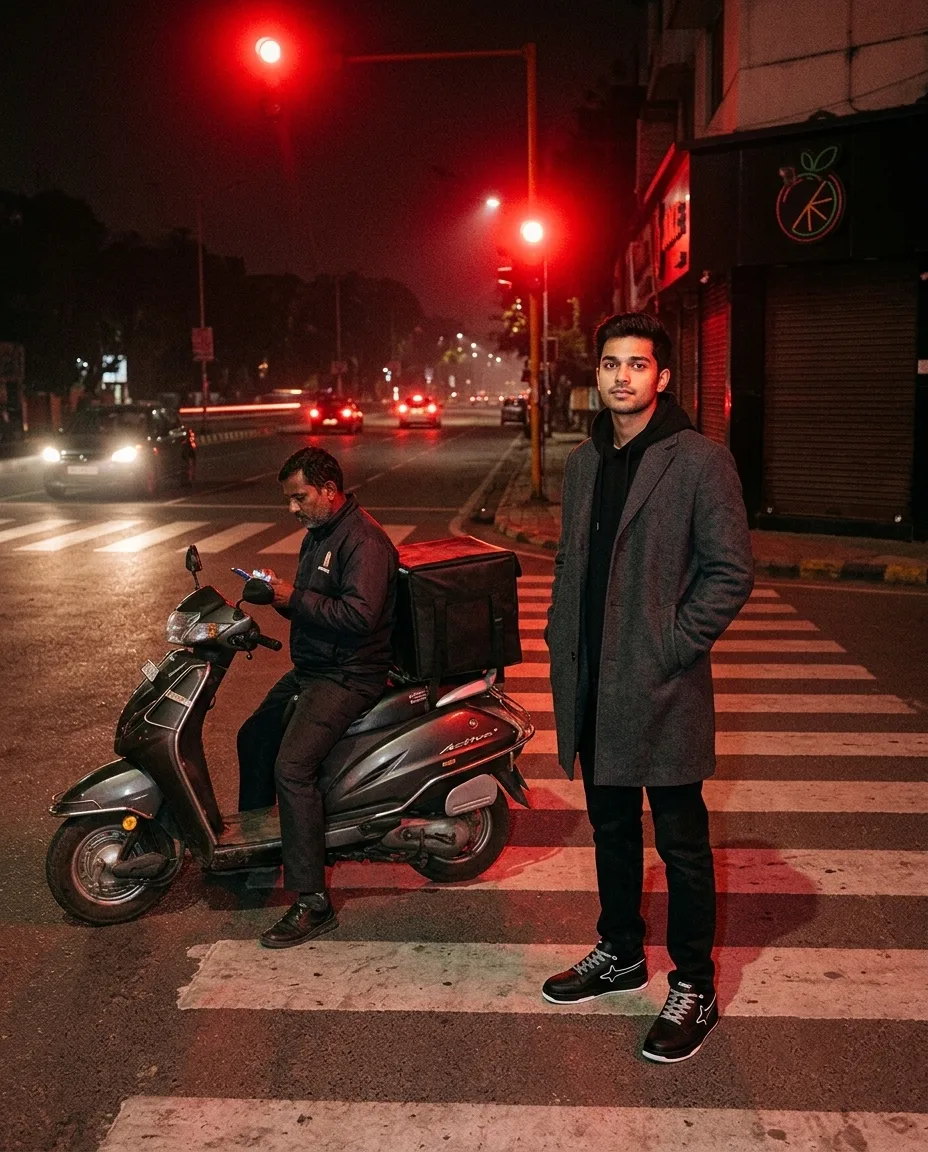
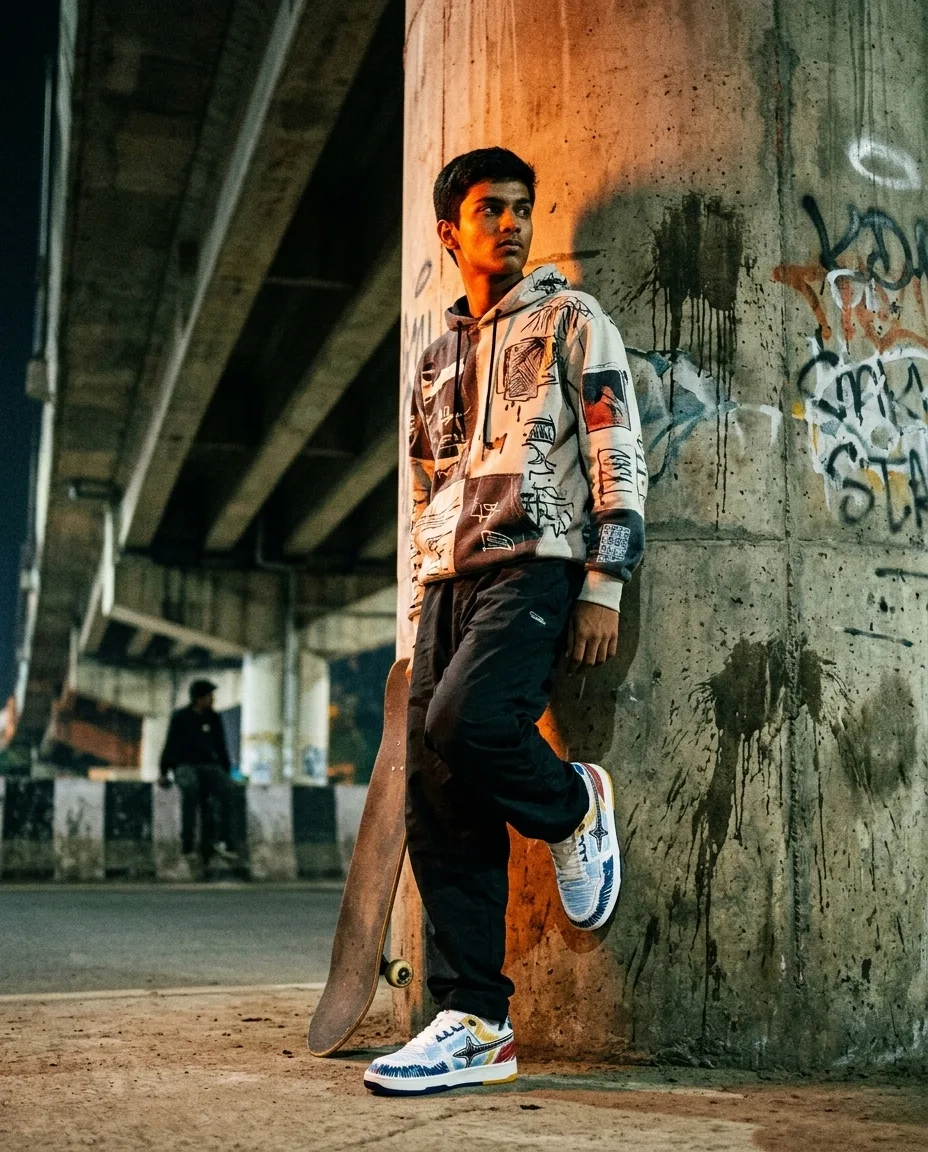
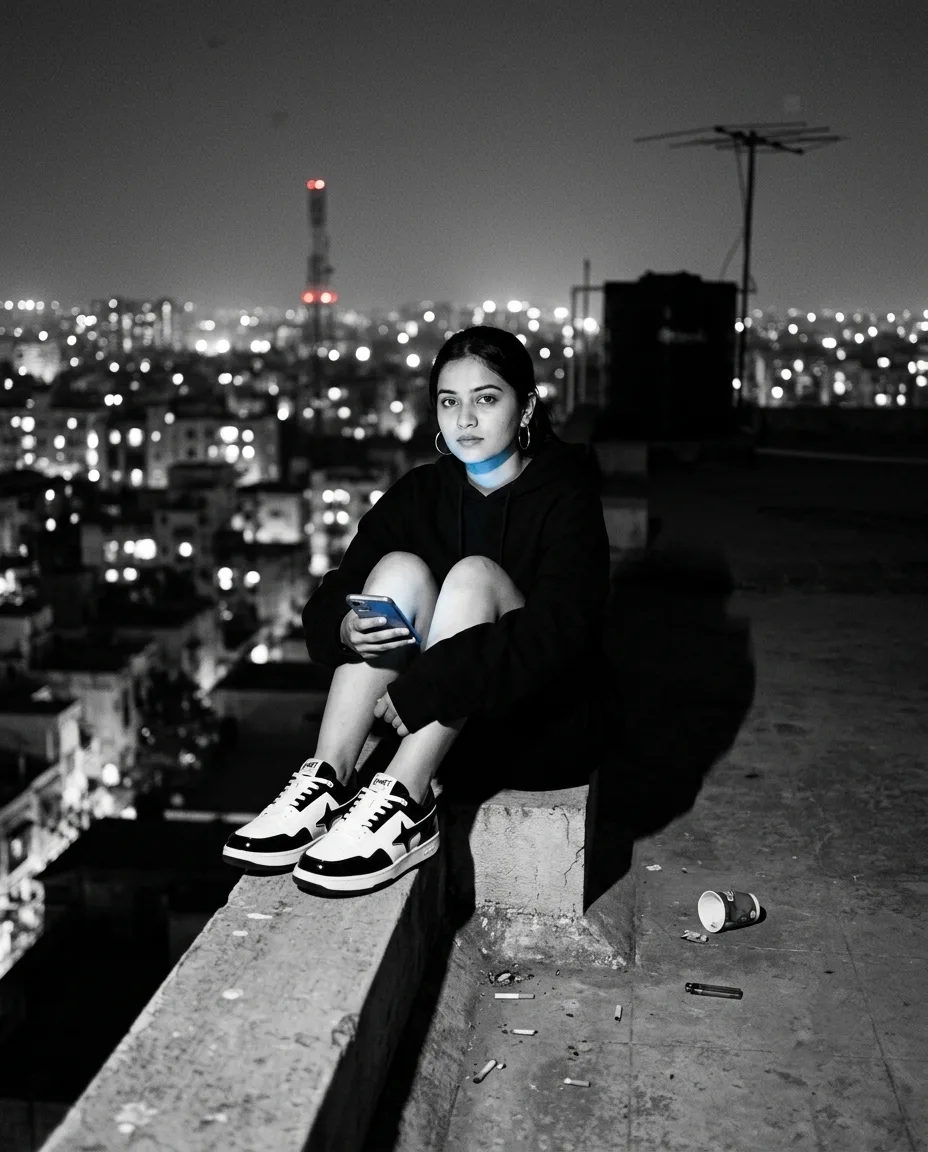
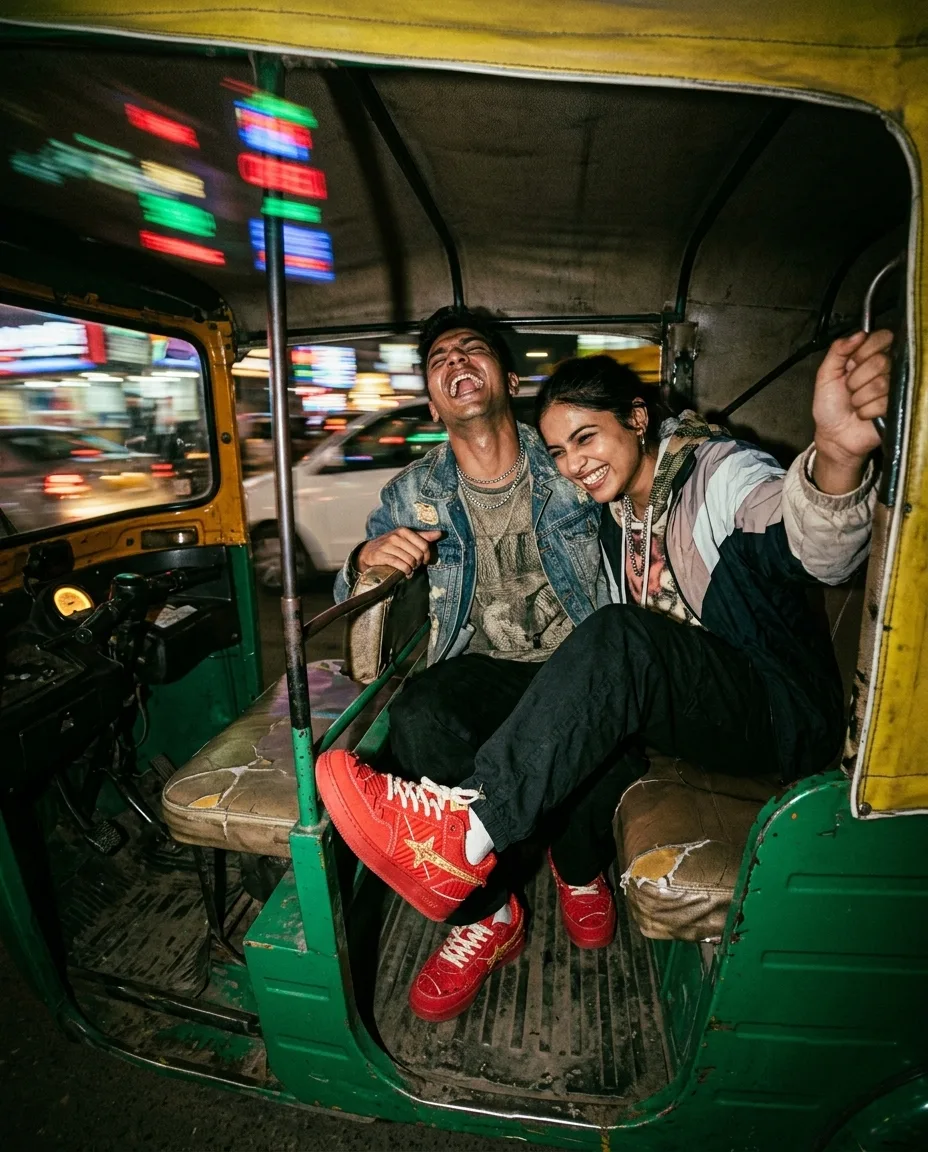
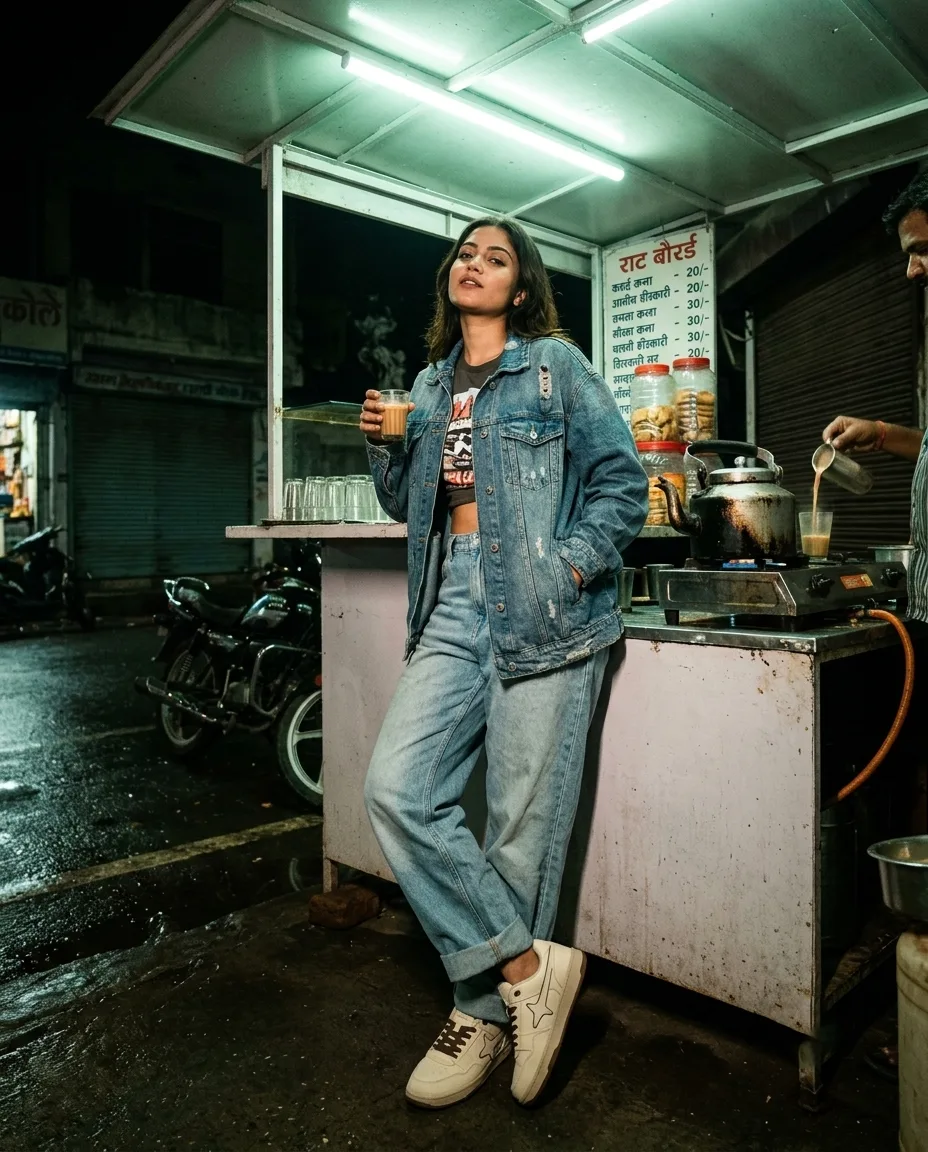
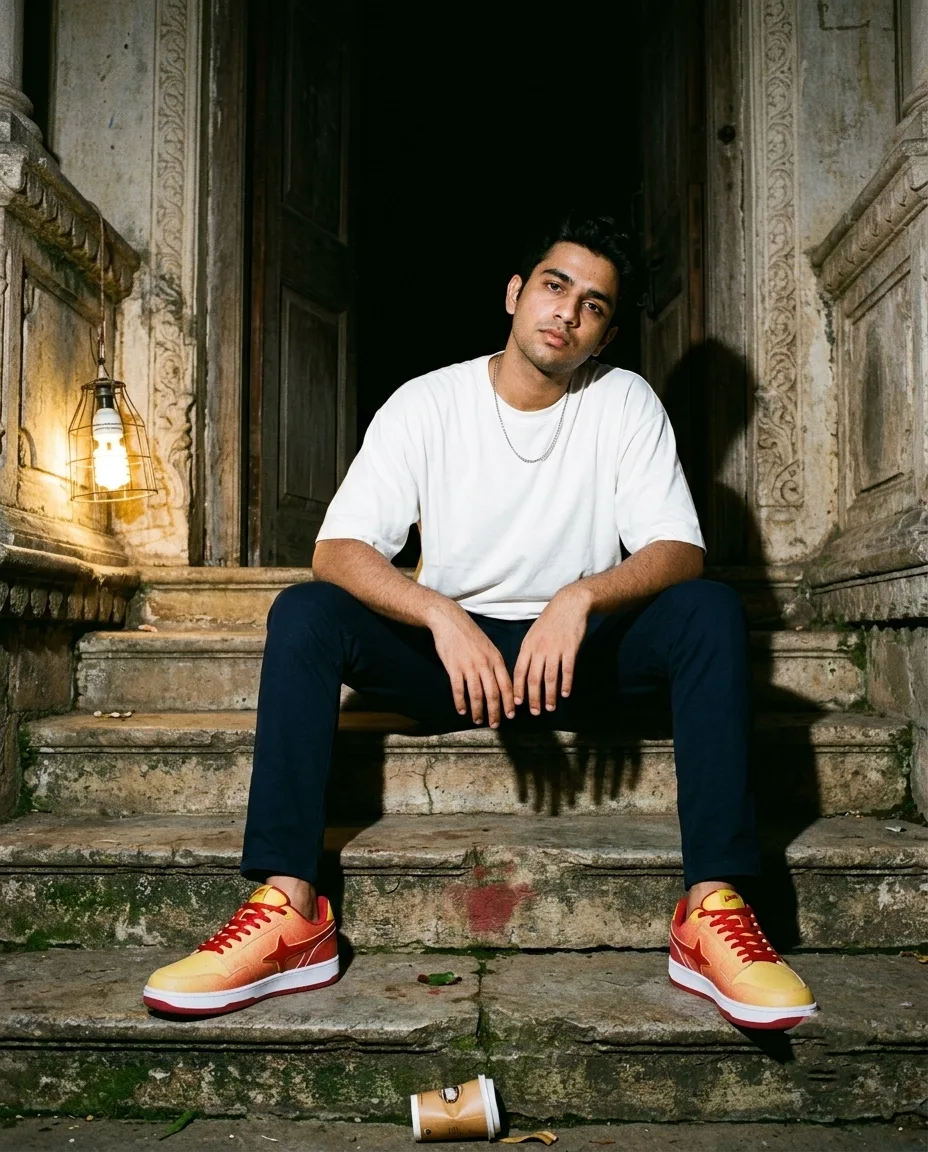
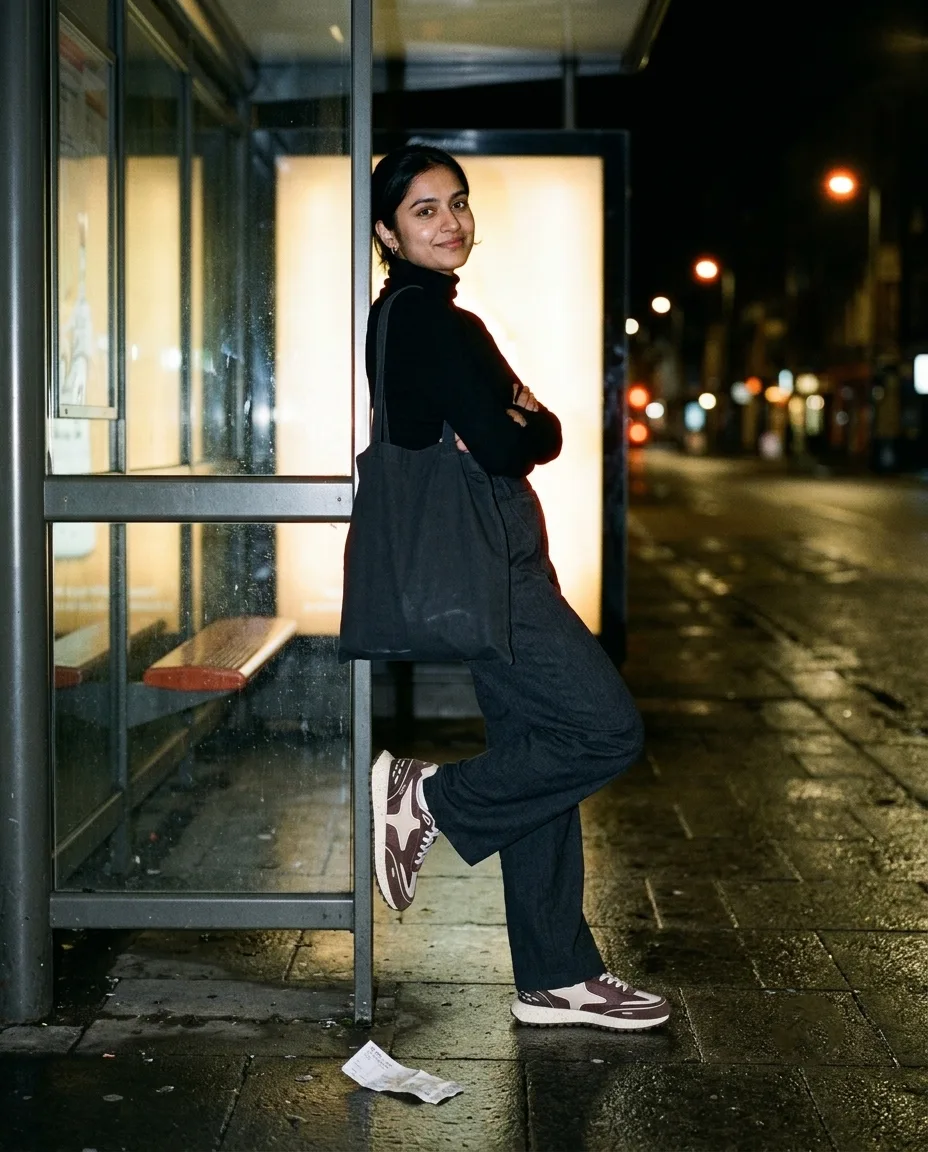
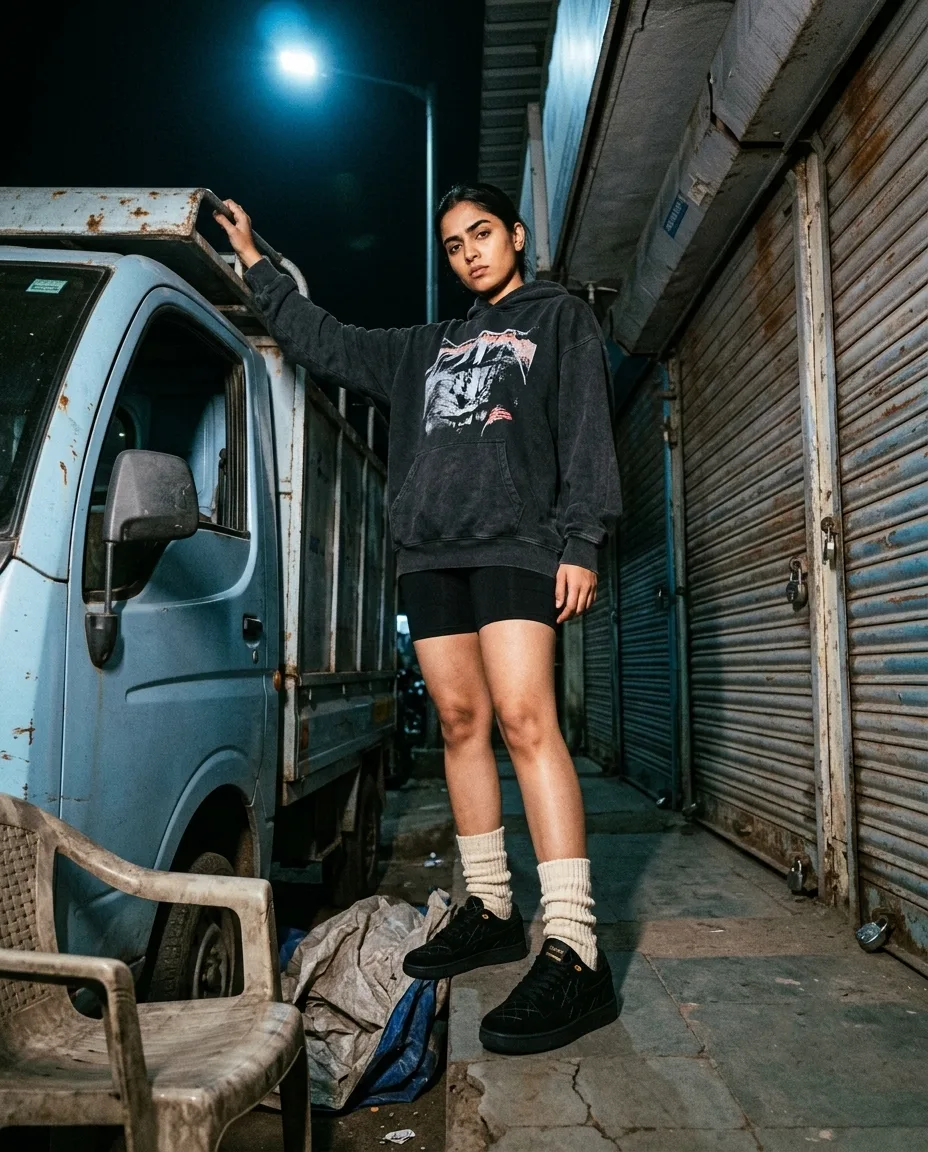
On-camera flash against ambient night light — sodium, fluorescent, neon, traffic signals. The clash of colour temperatures is the visual DNA. Two stills break the pattern deliberately (venue spill, single hanging bulb) — variation within a system keeps a set alive.
Every subject looks at or near the camera with a specific, directed expression — not smiling, not brooding, not posing. Present. The look of someone who knows they're being photographed and has decided to give you something real instead of something performed.
Every location is a real Indian urban environment at night — metro platforms, chai stalls, flyover underpasses, auto-rickshaws, traffic signals, hostel corridors, rooftop parapets. The environments aren't dressed or cleaned up. They're the actual stage where Comet's audience lives.
The sneaker is worn, scuffed, mid-stride, kicked off. Never hero-shot. Never the compositional centre. It's the most designed element in a frame full of found textures — and that contrast is the whole point. Each still features a different Comet colourway.
Ultra-condensed, all-caps, zero tolerance for subtlety. The poster font — built for walls, billboards, and the kind of type that reads at 100km/h. Used for all English campaign titles and section numbers.
Condensed, industrial, bilingual. Teko carries both Devanagari and Latin with the same compressed energy — no font-switching, no tonal mismatch. Used for Hindi campaign lines, statistics, and anywhere numbers need presence.
Optical sizing that shifts personality with scale — tighter and sharper at headline sizes, more grounded at body. Built-in variation that keeps display type from reading as mechanical without tipping into quirky. The voice font — carrying the campaign's attitude with precision, not personality tricks.
Geometric, modern, slightly techy — a nod to Comet's SpaceWalk sole technology and their digital-first DNA. Clean enough to carry paragraphs, specific enough to not be mistaken for anyone else's body font.
The photographer's logbook. Film stocks, focal lengths, lighting notes. Precision without personality — the mechanical voice underneath the creative one.
Not designed — extracted. Every colour in this system comes from the stills themselves. Signal Red from a traffic light at an empty intersection. Sodium from a streetlight raking across a flyover pillar. Neon Green from a pharmacy sign reflected in wet asphalt. Cool Blue from a phone screen lighting someone's face at 2am. The void is the actual colour of an Indian city street between streetlights.
Release one still per week on Comet's Instagram as a single-image post — no carousel, no caption essay. Just the image, the location name, and "रात अपनी है." The drop cadence mirrors the brand's own limited-release model. Scarcity in content, not just product.
All eight stills published together with art direction notes, the concept thesis, and the strategy. This is the asset that travels to brand leads and marketing teams — proof that a cultural sneaker brand can be visualised with the same cinematic ambition as a Nike or Adidas global campaign, by an Indian studio, with AI as the medium.
The flash-photography aesthetic is built for out-of-home. These images punch harder at scale than at screen size — the grain, the contrast, the faces that look directly at you from a bus shelter panel at the very platform where the photo was conceptually "taken." The 4:5 ratio maps to standard OOH portrait formats.
Invite Comet's community to shoot their own flash-at-night portraits wearing their Comets. Not a hashtag campaign — a visual challenge with a clear brief: one flash, one pair of Comets, one Indian street at night. Comet reposts the strongest in the campaign's visual treatment. The brand becomes a gallery, not a store.
Urban Indians aged 18–28. The generation that grew up watching sneaker culture from Chicago and Tokyo on Instagram and decided they didn't need to borrow it — they'd build their own. They buy Comet not because it's cheaper than Nike (though it is), but because "Mango" and "Jugnu" and "Pataka" are their references, not someone else's. This campaign visualises the world they already live in — and gives it back to them at the resolution it deserves.
Secondary audience: marketing leads and brand founders at Indian D2C companies. This case study demonstrates what a nocturnal street-editorial campaign looks like when executed with cinematic precision and AI as the production medium — a proof point for Cyanotype Studio.